

UFOs on the Moon: that’s the claim in a new paper from the Main Astronomical Observatory of the National Academy of Sciences of Ukraine. A team of astronomers there says high-speed video of the sky near the Moon has captured more than 20 unidentified objects — including disc-shaped formations 25 to 40 kilometers across and a rotating, toroidal structure roughly 36 kilometers wide that the researchers say generates artificial gravity twice as strong as Earth’s. The findings, published as “UFO Dynamics on the Moon” by Boris Zhilyaev, Vladimir Petukhov, and Sergey Pokhvala, are already circulating widely after a recent video breakdown of the paper.
How the Observations Were Made
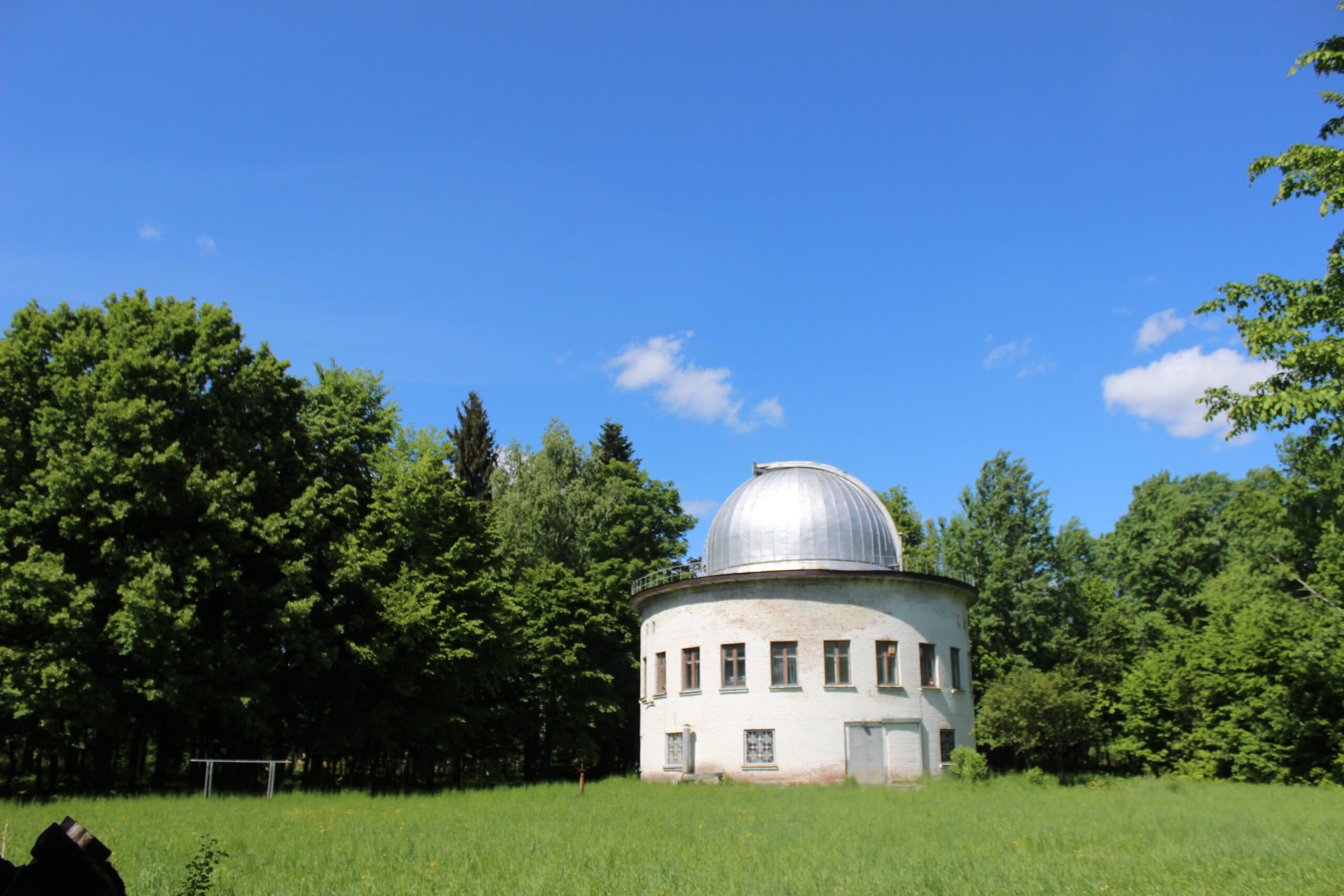
The team monitored the Moon from Vinarivka village in Ukraine’s Kyiv region using an Intes-AlterM603 telescope fitted with an ASI 294 Pro camera, recording video at a time resolution of 0.05 seconds. Two observing sessions are central to the paper: one on September 7, 2025 (23:05:02 UT and 23:27:49 UT), which captured what the authors call “atmospheric” objects, and one on August 16, 2025 (06:52:00 UT), which captured the toroidal objects. Data were calibrated for dark current and sensor variation, recorded with SharpCap 4.0, and processed in MATLAB.
The researchers sort what they found into two broad categories: atmospheric UFOs, which stay fixed in position relative to the Moon (the paper says they move “in sync” with it, meaning they’re effectively anchored rather than drifting against the lunar disc), and continental UFOs, which move across the Moon’s surface itself.
Flashing “Atmospheric” Objects
More than 20 stationary objects were counted in the September frames. Each showed brightness flashes lasting 100 to 500 milliseconds, with an intensity swing of roughly one magnitude, pulsing at a fundamental frequency plus several harmonics in the low-hertz range — a pattern the authors describe as characteristic of “pulsed processes.” Two of the objects, separated by hundreds of kilometers, were found to brighten and dim in sync with a stated 95% confidence level.
Sizing objects that shine only by reflected sunlight requires assumptions about reflectivity (albedo). Using the Moon’s own albedo of 0.064 as a stand-in, the team calculates the atmospheric objects at roughly 1,800 meters across; if the objects reflect 100% of incoming sunlight, that figure drops to about 440 meters. Either way, the paper concludes, “atmospheric UFOs are very impressive in size.”
Disc-Shaped “Continental” Objects
The second category moves across the lunar surface rather than sitting fixed against it. One object was tracked crossing 22 kilometers in a single video pass at a speed of 6.6 kilometers per second. Two disc-shaped objects were measured at approximately 25 and 40 kilometers in diameter, each showing brightness fluctuations of up to 1% at frequencies of 3.0, 4.5, and 6.0 hertz — again read by the authors as evidence of a periodic, non-random process rather than noise.
A 36-Kilometer Ring With “Artificial Gravity”
The paper’s most striking claim involves a set of toroidal — ring- or donut-shaped — objects photographed against a bright daytime lunar sky, with contrast as low as 5%, low enough that the authors say specialized image processing was required just to pull them out of the frame. Analysis of the object’s color channels found the red, green, and blue intensities nearly identical, a signature the team associates with black-body behavior: the object appears to absorb almost all the light hitting it rather than emitting its own. Combined with the Moon’s known albedo, that puts the torus’s own reflectivity at just 0.061 — meaning it is, in the authors’ words, “heavily obscured and difficult to detect.”
The measurements the team extracts from the toroid are specific: a diameter of about 36 ± 3 kilometers, speeds reaching 11 kilometers per second, a rotation period of approximately 180 seconds, and — because something that size rotating that fast would fling anything on its outer rim outward — a calculated centrifugal acceleration of 2,200 cm/s². For comparison, gravitational acceleration at Earth’s surface is about 980 cm/s². If the numbers hold, the authors argue, whatever occupies the rim of that structure would experience roughly double Earth gravity, generated mechanically rather than by mass.
To pull a clean brightness signal out of such a faint, low-contrast target, the team used a “phase discrimination” technique: comparing the Fourier spectrum of the object’s light curve against the Moon’s own “global light curve” (essentially the Moon’s overall brightness variation from atmospheric and tracking effects) and discarding harmonics that match between the two, on the theory that shared noise isn’t coming from the object itself. What’s left, after that cleanup, showed variability of only a few tenths of a percent, peaking at 1.0, 3.0, 4.5, and 6.0 hertz — multiples of a 1.5 hertz fundamental.
What the Researchers Conclude
The paper places its findings alongside earlier work it cites as precedent, including Mark Carlotto’s analysis of a 1996 Space Shuttle Columbia image showing an anomalous object in low-Earth orbit, and Carlotto’s 2020 report of three large unidentified objects near the Moon estimated at 5 to 15 miles long. The authors say they followed research methodology outlined by Jacques Vallée at a 2014 CAIPAN workshop hosted by the French space agency CNES.
Ian Clague, CEO of the propulsion company Dirac Drives, is quoted in the paper’s discussion section: “I have studied UFOs and I see that no country on Earth has developed such a propulsion system. The physics of such a propulsion system are beyond the accepted physics here on Earth.”
From there, the authors draw their central conclusion: that the Moon functions as a base for these objects, that they could reach Earth in about 20 minutes, and that on Earth they would be observed as UAP — unidentified anomalous phenomena. The paper states plainly that the objects “demonstrate intelligent behavior and can be regarded as a technologically advanced civilisation.”
Worth Noting
This is an independent study from a national observatory, not a finding from NASA, AARO, or a peer-reviewed astronomy journal in the traditional sense — it was published in the Journal of Artificial Intelligence and Soft Computing Techniques, and its size, speed, and gravity figures rest on assumptions (particularly about albedo and distance) that the authors themselves flag as estimates rather than measurements. We’re covering it because of the specificity of the claims and the growing public attention around it, not as a verified detection. As always, we’ll follow how the broader research community responds.
Watch: A Breakdown of the Findings
The video below walks through the paper’s imagery and claims in more detail.
Read the Full Paper
“UFO Dynamics on the Moon” by Boris Zhilyaev, Vladimir Petukhov, and Sergey Pokhvala (Main Astronomical Observatory, NAS of Ukraine) is available to read in full on Academia.edu.
This is an independent, non-peer-reviewed study. UAP Disclosure Reads will continue to track responses from the broader astronomical community.