
Ahead of the Phoenix Lights 30th anniversary, it is worth revisiting what thousands of people across Nevada and Arizona watched on March 13, 1997, something they still cannot fully explain. That event, known as the Phoenix Lights, remains one of the most heavily witnessed UFO sightings in American history. We covered the night itself in detail in a recent video. This article does not retell that story. It picks up where the story usually stops: what has happened to the case, and the people in it, in the decades since.
Why Revisit This Case Now
The 30th anniversary falls on March 13, 2027. In the years leading up to it, the case has quietly kept accumulating new material: a governor’s reversal, a federal office’s blanket conclusion about historical UAP claims, a documentary rebuttal, and testimony in front of Congress from a journalist who has covered the case since it happened. None of that existed the last time most retrospectives on the Phoenix Lights were written. This is an attempt to catch the record up.
The Witness Who Changed His Story
No detail from the Phoenix Lights aftermath is stranger than what its most famous skeptic did about a decade later.
In June 1997, Arizona Governor Fife Symington held a press conference where a staffer walked out in a gray alien costume, a stunt Symington later said was meant to defuse public anxiety about the sighting. For years, that was the state’s final word on the matter: a joke.
Then, on the tenth anniversary in 2007, Symington gave an interview to CBS News and said he had watched the object himself that night, from his own vantage point, and that it matched what the witnesses were describing almost exactly: massive, silent, and moving with deliberate control. He called it otherworldly and said he still could not explain it. A sitting governor who had mocked the case in public spent the next decade admitting, privately and then publicly, that he could not explain what he saw either.
That reversal is now nearly twenty years old itself, and it remains the single most cited data point by researchers who argue the case was never adequately closed.
What the Official Record Actually Says Now
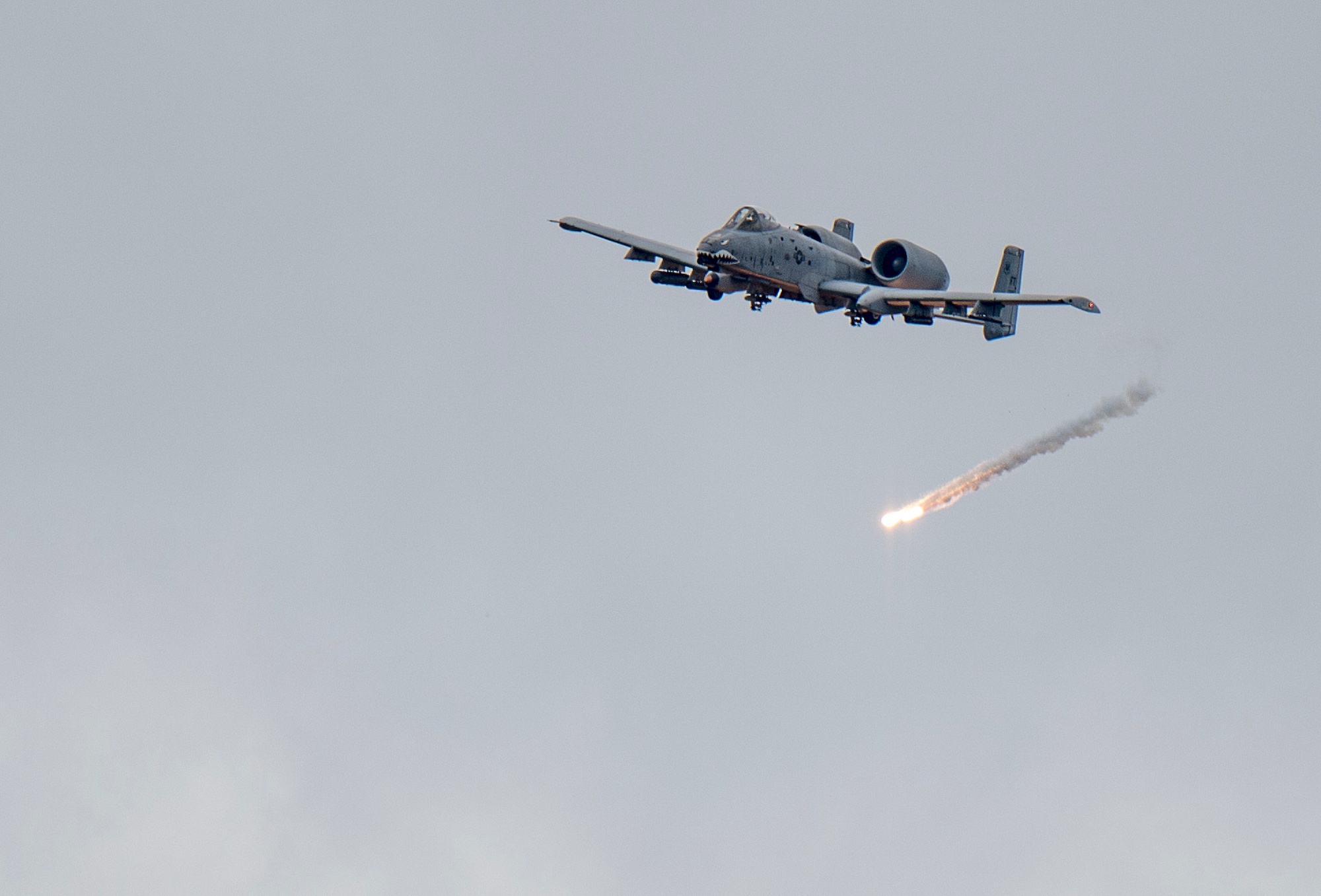
The explanation for the second phase of that night, the row of stationary lights that hung over the Sierra Estrella mountains around 10 p.m., has held up well since 1997. Those were LUU-2B illumination flares, dropped by Maryland Air National Guard A-10s during a Barry M. Goldwater Range training exercise, part of a winter rotation known as Operation Snowbird. Lieutenant Colonel Ed Jones, one of the pilots, confirmed his role publicly in 2007.
What has not held up as well is the paper trail behind it. A 2013 Freedom of Information Act request to Davis-Monthan Air Force Base, seeking the operational logs from that specific flare mission, came back empty. Per the base’s records retention rules at the time, logs of that kind were destroyed after six months, meaning the underlying military paperwork for the most cited official explanation in the whole case was gone years before anyone thought to ask for it. The explanation is almost certainly correct on the physics, distance, and timing. It simply cannot be verified against the original government record, because that record no longer exists.
The first phase, the low, silent, V-shaped mass that passed over the state ninety minutes earlier and drew by far the most consistent witness testimony, has never been officially tied to any confirmed military asset. That gap is exactly where it stood in 1997, and it is exactly where it stands today.
In March 2024, the Pentagon’s All-domain Anomaly Resolution Office released its Historical Record Report Volume 1, a review of decades of historical UAP claims across the U.S. government. Its broad conclusion was that it found no verifiable evidence of alien technology, crash retrievals, or a hidden reverse-engineering program in any of the historical claims it examined. The report was not built around any single sighting, and it does not single out the Phoenix Lights by name in its public conclusions, but its sweeping “no evidence found” framing has become one more thing every legacy UFO case, this one included, now gets measured against.
That framing did not go unanswered. Investigative journalist George Knapp, who has covered UAP cases since the 1990s, produced a direct rebuttal to the AARO report for Netflix’s Investigation Alien in November 2024, arguing the report’s methodology and access to source material were narrower than its conclusions implied. Less than a year later, Knapp testified in person before the House Oversight Committee’s September 9, 2025 hearing on UAP transparency and whistleblower protection, alongside military veterans presenting new firsthand claims. His written testimony and the full hearing video are both part of the public congressional record now, something no one covering the Phoenix Lights in its first decade had reason to expect would exist.
What the Witnesses Say Now, Decades Later
Dr. Lynne Kitei, the Phoenix physician who photographed the second phase from her own home that night, never stopped documenting the case. In the years since her book and documentary, both titled The Phoenix Lights, she has continued collecting new witness accounts and updates through her own site, thephoenixlights.net, which now functions as the most complete public timeline of the case’s aftermath, anniversary by anniversary. Her consistent position across nearly thirty years has not been that she can prove what the object was. It is that the volume and consistency of firsthand testimony, from police officers, pilots, and a sitting governor, deserved to be taken seriously rather than dismissed.
The Ley family’s account, of a low, slow, silent, solid object passing almost directly overhead, remains the most detailed firsthand description on record, and it has not changed in the retelling over multiple later interviews. That consistency, decades on and without the witnesses ever having coordinated their stories, is itself part of what keeps researchers returning to this specific case over other 1990s-era sightings that faded from public attention.
The Congressional Attention the Case Never Had in 1997
There was no congressional hearing on UAP in 1997. There have been several since 2022, and the Phoenix Lights keeps surfacing in that context, not as the subject of a hearing, but as the reference case reporters and researchers reach for when they need to describe what a credible, mass-witnessed sighting looks like. The May 2022 hearing, the first on UAP in decades, and the July 2023 House Oversight Committee hearing featuring military whistleblower testimony, both renewed national attention to legacy cases from the pre-Pentagon-taskforce era. Arizona’s own congressional delegation has been part of the broader push for UAP records disclosure in this period, though no member has singled out the Phoenix Lights by name in floor statements on the record.
What’s Actually New, and What Still Isn’t Explained
Strip out the noise and three genuinely new things have entered the record since the story was first told: Symington’s own 2007 reversal, the 2013 discovery that the flare mission’s paper trail no longer exists, and the 2024-2025 collision between AARO’s blanket “no evidence” conclusion and a sitting journalist’s congressional testimony arguing that conclusion oversimplified the record. None of it resolves the case. All of it changes what “the record” actually contains.
What has not changed is the one detail no explanation, official or otherwise, has ever accounted for: dozens of independent witnesses across a three-hundred-mile stretch of two states, describing not lights, but a single, dark, solid shape passing low and silent overhead. Nearly thirty years on, that is still the part of the Phoenix Lights that the flares never explained, and the part every subsequent investigation keeps circling back to.