
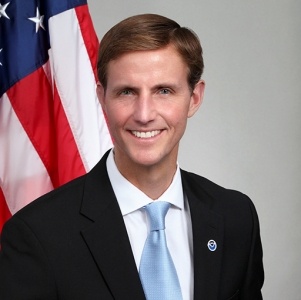
Dr. Tim Gallaudet is a retired Rear Admiral in the U.S. Navy and former acting Administrator of the National Oceanic and Atmospheric Administration (NOAA) who has become one of the most scientifically credentialed voices in the UAP disclosure debate. A career oceanographer and meteorologist with a doctorate and 32 years of naval service, Gallaudet testified before the U.S. House Committee on Oversight and Accountability on November 13, 2024, arguing that the ocean — not the sky — may be the most important domain for understanding UAP. His focus on transmedium phenomena and unidentified submerged objects (USOs) represents a significant expansion of the UAP conversation beyond its traditional air-domain framing.
Biography & Background
(Photo to be added — U.S. House Committee public domain testimony photo, November 13, 2024)
Tim Gallaudet served for 32 years in the United States Navy, retiring at the rank of Rear Admiral. His career was rooted in oceanography and meteorology: he was designated the Oceanographer of the Navy, a senior technical authority role responsible for providing oceanographic and meteorological support to naval operations. He holds a Ph.D. in oceanography, making him one of the few figures in the UAP public discussion with deep scientific credentials in the domain he addresses.
During his naval career, Gallaudet commanded the Naval Meteorology and Oceanography Command (NMOC) — the organization responsible for environmental intelligence for the entire U.S. Navy, covering ocean, atmosphere, and space weather. His expertise encompassed scientific analysis, operational planning, and national defense applications of environmental data.
Following his retirement from the Navy, Gallaudet was appointed to senior roles in the Trump Administration, serving as both the acting and Deputy Administrator of the National Oceanic and Atmospheric Administration (NOAA), as well as the acting Under Secretary and Assistant Secretary of Commerce for Oceans and Atmosphere. These roles placed him at the top of the United States’ civilian ocean science establishment — a vantage point that would later inform his approach to UAP.
In addition to his military and government roles, Gallaudet has served as a member of the Ocean Studies Board of the National Academies of Sciences, Engineering, and Medicine and on the White House Ocean Research Advisory Panel — positions that reflect his continued standing in the scientific community after leaving government.
UAP & The Ocean Connection
Gallaudet’s engagement with UAP centers on a claim he has made consistently and publicly: that the ocean domain is systematically underrepresented in UAP research, and that some of the most significant evidence for anomalous craft comes from underwater and transmedium incidents rather than purely aerial ones.
The pivotal personal incident Gallaudet has cited occurred in January 2015, when he was serving as Commander of the Naval Meteorology and Oceanography Command. During a pre-deployment naval exercise off the U.S. East Coast involving the USS Theodore Roosevelt Carrier Strike Group — the same carrier group at the center of the 2014–2015 encounters described by Ryan Graves — Gallaudet states that UAP were present and interacting with naval assets. He has described this as the moment he became convinced that UAP represent a genuine phenomenon that demands scientific attention.
Beyond his personal experience, Gallaudet has relayed accounts from submarine personnel who reported observing advanced, unidentified objects on sonar data. These accounts, which Gallaudet received directly from submarine crew members who approached him specifically because of his role as the Navy’s senior oceanographer, describe objects displaying performance characteristics consistent with other UAP reports: movement that defies known propulsion systems, behaviors inconsistent with known underwater vehicles or marine life.
Gallaudet argues that this class of phenomena — sometimes called Unidentified Submerged Objects (USOs) — and the broader category of transmedium UAP (objects that transition between air and water) represent a research gap that neither the defense establishment nor the civilian scientific community has adequately addressed. His position at the intersection of naval intelligence and ocean science gives him a unique vantage point on why that gap exists: the classification barriers, the cultural stigma in both military and scientific institutions, and the absence of any dedicated underwater UAP monitoring infrastructure.
Congressional Testimony (November 13, 2024)
Gallaudet testified before the House Committee on Oversight and Accountability on November 13, 2024, at the hearing titled “Unidentified Anomalous Phenomena: Exposing the Truth.” He appeared alongside Luis Elizondo, Michael Gold, and Michael Shellenberger.
In his written testimony submitted to the committee, Gallaudet made several significant claims. He stated that UAP have been confirmed to exhibit transmedium travel — moving through both air and water — and that this behavior has been documented in naval operational environments. He called for the ocean to be formally designated a priority domain for UAP research, arguing that the current focus on aerial phenomena ignores a substantial body of evidence.
Gallaudet also addressed the institutional barriers to UAP disclosure from a scientific perspective. As a former NOAA administrator with standing in the scientific community, his argument that the stigma around UAP is suppressing legitimate research carried weight beyond what a purely military witness could offer. He described a system in which both military personnel and civilian scientists face professional consequences for taking UAP seriously — a dynamic he linked directly to the absence of ocean-domain UAP research in any major academic or government program.
Scientific Advocacy & Significance
Gallaudet’s significance in the UAP disclosure context derives from a combination of factors that are rare among prominent witnesses. He brings a Ph.D.-level scientific background in the specific domain — oceanography — where he is claiming anomalous phenomena occur. He served at the highest levels of both naval command and civilian government science administration. And his claims are specific: he is not making general assertions about UAP but focused arguments about a particular class of phenomena (transmedium/USO) in a particular domain (the ocean) for which he has both personal experience and institutional knowledge.
His advocacy reflects a broader argument in the disclosure community: that UAP research has been artificially constrained to the aerial domain by the organizational structures of the military (where UAP reporting flows through aviation channels) and by media coverage that focuses on air encounters. Gallaudet’s contention is that transmedium capability — objects moving seamlessly between air and water — may actually be the defining characteristic of advanced UAP, and that understanding this requires serious scientific investment in the ocean domain.
Through his membership on the National Academies Ocean Studies Board and his post-government public advocacy, Gallaudet is working to bring UAP into mainstream scientific discourse — not as a fringe claim but as a legitimate national security and scientific research priority requiring the same rigor applied to other unexplained phenomena in ocean science.
Frequently Asked Questions
Who is Dr. Tim Gallaudet?
Dr. Tim Gallaudet is a retired U.S. Navy Rear Admiral, former acting Administrator and Deputy Administrator of NOAA, and Ph.D. oceanographer who testified before Congress on November 13, 2024 about UAP in the ocean domain. He is the former Oceanographer of the Navy and Commander of the Naval Meteorology and Oceanography Command.
What did Tim Gallaudet say about UAP in the ocean?
Gallaudet testified that UAP have been observed exhibiting transmedium travel — moving through both air and water — and that submarine personnel reported anomalous objects on sonar data. He argues the ocean is a critically underresearched domain for UAP and that unidentified submerged objects (USOs) represent a genuine national security and scientific concern.
When did Gallaudet testify before Congress?
Gallaudet testified before the House Committee on Oversight and Accountability on November 13, 2024, at the hearing “Unidentified Anomalous Phenomena: Exposing the Truth.” He appeared alongside Luis Elizondo, Michael Gold, and Michael Shellenberger.
What was Tim Gallaudet’s personal UAP experience?
In January 2015, while commanding the Naval Meteorology and Oceanography Command, Gallaudet was present during a pre-deployment exercise involving the USS Theodore Roosevelt Carrier Strike Group off the U.S. East Coast — the same carrier group associated with the 2014–2015 UAP encounters described by Ryan Graves. He has described this experience as foundational to his belief that UAP represent a real phenomenon.
What is a USO in the context of UAP?
USO stands for Unidentified Submerged Object — an anomalous object observed underwater or transitioning between air and water (transmedium travel). Gallaudet argues that USOs and transmedium UAP may represent the same class of advanced phenomena and that their study requires dedicated ocean-domain research infrastructure separate from the aerial UAP programs currently in place.
What role did Gallaudet serve at NOAA?
Gallaudet served as the acting and Deputy Administrator of the National Oceanic and Atmospheric Administration (NOAA) and as the acting Under Secretary and Assistant Secretary of Commerce for Oceans and Atmosphere during the first Trump Administration. These roles made him the top civilian official overseeing U.S. ocean and atmospheric science policy.
Why is Gallaudet’s UAP testimony significant?
Gallaudet is unusual among prominent UAP witnesses because he combines a Ph.D. in the exact scientific domain (oceanography) where he is claiming anomalous activity occurs with senior military command experience and high-level civilian government service. His argument that the ocean is an underresearched UAP domain is grounded in institutional knowledge of why that gap exists — not speculation.