
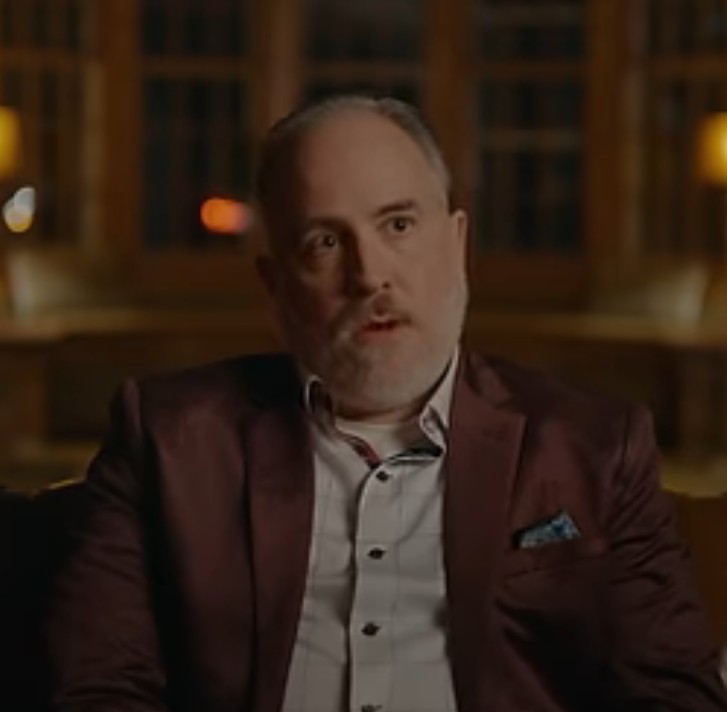
Jay Stratton is a retired U.S. government intelligence executive who spent over 16 years as Washington’s primary official investigator of unidentified aerial phenomena — the longest continuous UAP tenure of any known government figure. Over a career spanning more than 32 years of combined military and federal service, Stratton held key roles in all three of the U.S. government’s major UAP investigation programs: AAWSAP, AATIP, and the UAP Task Force (UAPTF). As the first Director of the UAPTF, he was responsible for producing the landmark June 2021 Preliminary Assessment that formally introduced the UAP issue to the U.S. Congress and the public. Since leaving government, Stratton has confirmed seeing “non-human craft and non-human beings” with his own eyes — one of the most direct public disclosures made by a former senior U.S. intelligence official.
Biography & Background
(Photo to be added — public domain or press photo with appropriate attribution)
Stratton built his career as a defense intelligence senior executive within the U.S. national security apparatus. His service included roles at the Office of Naval Intelligence (ONI) and the Defense Warning Office of the Defense Intelligence Agency (DIA), as well as assignments across other sensitive national security programs. His specialty was the reverse engineering of technologies, threats, and future scenarios — analytic work requiring the synthesis of classified sensor data, signals intelligence, and technical assessments to characterize adversary capabilities and unknown phenomena.
This background made Stratton a natural fit for UAP investigation. The core challenge in assessing UAP — determining whether an unknown object represents an adversary technology, a natural phenomenon, a sensor artifact, or something else — is precisely the kind of all-source technical intelligence problem that defense intelligence analysts are trained to tackle. Stratton’s work on UAP was not, from his perspective, a departure from his career; it was an extension of it.
Stratton retired from federal service in early 2022 as a defense intelligence senior executive after more than three decades of government service. He subsequently joined Radiance Technologies, a defense and intelligence technology company, in a post-government capacity. He has also written a memoir, Out of the Shadows, to be published by William Morrow (HarperCollins) on October 13, 2026. The book — described as a first-hand account of his 16-year career as the government’s principal UAP investigator — is expected to be one of the most authoritative insider accounts of the U.S. government’s classified UAP research ever published. Television and film rights have been secured by Age of Disclosure director Dan Farah. (People, June 3, 2026)
Three Programs, One Career: AAWSAP, AATIP & the UAP Task Force
Between 2007 and 2021, the U.S. government authorized three distinct programs to investigate UAP. Jay Stratton is the only known individual in the entire Defense Department who held key roles in all three — a fact that makes him the most continuous thread in the institutional history of government UAP investigation.
The first program, the Advanced Aerospace Weapon System Application Program (AAWSAP), was established around 2007 under a contract with Bigelow Aerospace Advanced Space Studies (BAASS) and managed by the Defense Intelligence Agency. It was the most expansive of the three, covering not only UAP sightings but broader anomalous phenomena. The second, the Advanced Aerospace Threat Identification Program (AATIP), was the congressional earmark managed most visibly by Luis Elizondo and focused more narrowly on the aerial threat identification mission. The relationship and overlap between AAWSAP and AATIP has been one of the most debated questions in UAP research.
The third program — the one Stratton led — was the UAP Task Force (UAPTF), formally established by the Department of Defense in August 2020. Stratton was selected as its first Director. The UAPTF represented a significant institutional upgrade from its predecessors: it was an interagency “whole of government” team tasked with standardizing UAP reporting across military services, creating a common database of incidents, and coordinating with the intelligence community on attribution. It was the first official DoD UAP body with a mandate to report to Congress.
The June 2021 Preliminary Assessment
The defining output of Stratton’s directorship of the UAPTF was the “Preliminary Assessment: Unidentified Aerial Phenomena,” delivered to Congress in June 2021 and simultaneously released publicly by the Office of the Director of National Intelligence (ODNI). Stratton is directly responsible for generating this report.
The document — nine pages of unclassified findings — covered 144 UAP reports collected by the U.S. government between 2004 and 2021. Its findings were carefully worded but significant: of the 144 cases, only one could be explained with confidence (a large deflating balloon). The remaining 143 remained unresolved. The report categorized potential explanations — airborne clutter, natural atmospheric phenomena, U.S. government or industry developmental programs, foreign adversary systems, and an explicit “other” category — without attributing most cases to any of them.
The report’s significance was institutional as much as factual. It was the first time the U.S. government officially acknowledged, in an unclassified document, that its military personnel were encountering objects it could not explain — and that this constituted a national security issue. The document directly preceded the legislative activity that would create the All-domain Anomaly Resolution Office (AARO) as the UAPTF’s successor, establish mandatory reporting requirements for UAP witnesses in the military, and eventually lead to the 2023 hearings at which David Grusch, Ryan Graves, and David Fravor testified.
Post-Government Disclosure & Significance
Since leaving government in 2022, Stratton has made increasingly direct public statements about what he believes — and what he says he has personally witnessed. His statement that “I have seen with my own eyes non-human craft and non-human beings” is among the most unambiguous public disclosures by any former senior U.S. intelligence official, made without the qualifying language that typically accompanies statements from figures still navigating classification constraints.
The significance of Stratton’s position in the UAP landscape is structural. He is not a pilot who saw something unexpected in the sky, nor a whistleblower alleging knowledge of a program he was not authorized to participate in. He was the government’s own designated UAP investigator — the person the DoD tasked with collecting, standardizing, and assessing UAP reports across the military — and he is now saying, publicly, that the phenomenon he was tasked with investigating is real and non-human in origin.
His forthcoming HarperCollins memoir is expected to address not only the bureaucratic history of the three UAP programs but his personal conclusions about what the evidence shows. Given the classification constraints that have limited the public statements of other insiders, the degree to which Stratton can speak openly in a book — versus what must remain classified — will be a key question for the disclosure community when it is published.
The UAPTF’s successor, AARO, continues to operate under congressional mandate. The institutional infrastructure Stratton built — standardized reporting, interagency coordination, congressional reporting requirements — is the foundation on which the current official UAP investigation rests, regardless of ongoing debates about whether that investigation is adequate or sufficiently transparent.
Frequently Asked Questions
Who is Jay Stratton?
Jay Stratton is a retired U.S. defense intelligence senior executive who spent over 16 years as the primary UAP investigator for the U.S. government. He held key roles in all three major government UAP programs — AAWSAP, AATIP, and the UAP Task Force — and served as the first Director of the UAPTF. He retired from government in early 2022 after more than 32 years of combined military and federal service.
What was the UAP Task Force and what did Stratton do there?
The UAP Task Force (UAPTF) was established by the Department of Defense in August 2020 as an interagency team tasked with standardizing UAP reporting across the military services and coordinating with the intelligence community. Stratton was its first Director, responsible for building its reporting infrastructure and producing the landmark June 2021 Preliminary Assessment on UAP delivered to Congress.
What was the June 2021 UAP Preliminary Assessment?
The “Preliminary Assessment: Unidentified Aerial Phenomena” was a nine-page unclassified report released by ODNI in June 2021, covering 144 UAP incidents reported by military personnel between 2004 and 2021. Stratton was responsible for generating this report. It was the first official U.S. government document to formally acknowledge unexplained aerial phenomena as a national security issue and directly preceded the creation of AARO and the legislative UAP reporting requirements that followed.
What has Stratton disclosed publicly about UAP?
Stratton has publicly stated: “I have seen with my own eyes non-human craft and non-human beings.” This is one of the most direct disclosures made by a former senior U.S. intelligence official. He has also signed a book deal with HarperCollins to publish a memoir of his years as the government’s principal UAP investigator.
What is the connection between the UAPTF and AARO?
The All-domain Anomaly Resolution Office (AARO) is the successor to the UAP Task Force. Congress mandated AARO’s creation through the Fiscal Year 2022 National Defense Authorization Act, building on the institutional framework Stratton established at the UAPTF. Where the UAPTF focused primarily on aerial military reporting, AARO has a broader mandate covering all domains — air, sea, space, and transmedium — and a statutory requirement to report to Congress.
What programs did Stratton work on before the UAP Task Force?
Stratton worked on UAP for the U.S. government beginning around 2007 — over a decade before the UAPTF was formally created. He had roles in both AAWSAP (the DIA-managed program operating around 2007–2012) and AATIP (the congressional earmark managed in part by Luis Elizondo), making him the only known DoD figure to have served in key capacities across all three programs.
Why is Jay Stratton significant to the UAP disclosure story?
Stratton is uniquely significant because his claims are not those of a peripheral witness or a lower-level analyst — he was the person the U.S. Department of Defense explicitly tasked with investigating UAP for over a decade. His public statements about non-human craft and beings carry a weight that is difficult to dismiss: he is not claiming to have heard something; he is the former chief of the government’s own UAP investigation office, and he is saying the phenomenon is real.