
Last updated: June 27, 2026
Affiliate disclosure: This review contains Amazon affiliate links. As an Amazon Associate I earn from qualifying purchases at no extra cost to you.
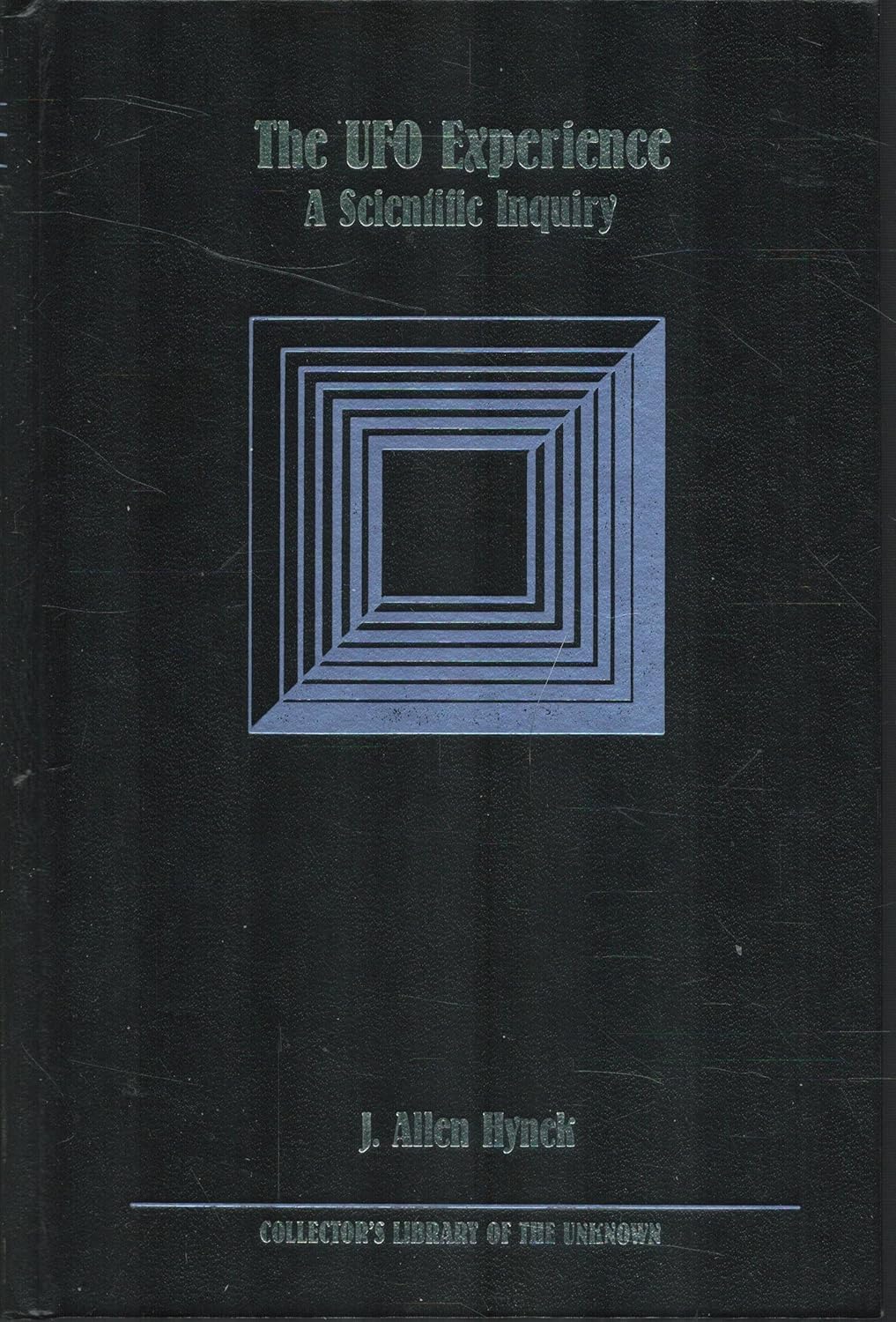
The book that changed everything
Before J. Allen Hynek published The UFO Experience in 1972, the study of unidentified aerial phenomena had no rigorous scientific framework. Hynek — an astronomer who spent two decades as the U.S. Air Force’s chief scientific advisor on Project Blue Book — changed that with a single book. It remains the most influential foundational text in UAP research, and one of the few works in the field that can be read today without embarrassment.What it covers
Hynek’s central contribution is his classification system for UAP encounters — the framework that gave us terms like “Close Encounter of the First, Second, and Third Kind” that have since entered popular culture. But the system is more than a taxonomy. It was Hynek’s argument that UAP data was real, varied, and patterned in ways that demanded scientific explanation rather than dismissal. Drawing on twenty years of Blue Book case files and his own investigations, Hynek demonstrates that a substantial percentage of reported UAP could not be explained as misidentified aircraft, weather balloons, or natural phenomena. He does this methodically, case by case, using the language and standards of working science. The tone throughout is that of a reluctant convert — a scientist who came to the subject as a debunker and found himself, against his professional instincts, unable to dismiss what the data showed.Why it still matters
Five decades after publication, the classification system Hynek developed here is still in use by researchers, governments, and the media. The five observable characteristics he identified — unusual flight behavior, electromagnetic effects, physical traces, witness physiology, and craft morphology — remain the organizing framework for modern UAP investigation. The 2021 ODNI preliminary assessment used a categorization system that was essentially an updated version of Hynek’s. More importantly, the book demonstrates that serious scientific engagement with UAP data was possible in 1972. It exposes, through sheer methodological contrast, how inadequate Project Blue Book was as an investigative effort — not through polemic but through the example of what rigorous analysis actually looks like.Caveats
The book shows its age in some respects. Hynek’s access to case data was limited by Cold War classification, and some of his specific case conclusions have been revised by subsequent investigation. The writing occasionally lapses into the slightly formal academic prose of its era. But these are minor criticisms of a foundational text.Who it’s for
Every serious student of UAP should read this book. It provides the scientific vocabulary and methodological baseline that all subsequent serious work has built on. Readers new to the field should start here before moving to more recent works — the framework Hynek established will make everything that comes after clearer and more meaningful.Where to get it
Frequently Asked Questions
What is The UFO Experience by J. Allen Hynek about?
The UFO Experience (1972) is J. Allen Hynek’s systematic analysis of UFO reports, in which he introduces his classification system — Close Encounters of the First, Second, and Third Kind — still used by researchers today. Hynek, who began as a skeptic serving as an Air Force consultant, argues the evidence demands serious scientific attention.
Who was J. Allen Hynek?
J. Allen Hynek was an astrophysicist and astronomer at Northwestern University who served as the scientific consultant to the U.S. Air Force’s UFO investigation programs (Project Sign, Project Grudge, and Project Blue Book) from 1948 to 1969. He is widely regarded as the father of modern UFO scientific study.
What is the Close Encounters classification system?
Hynek developed three categories of close encounter: CE1 (a UFO observed at close range with no physical trace), CE2 (a UFO that leaves a physical effect on the environment or witness), and CE3 (a UFO encounter involving occupants or entities). These terms were popularized by Steven Spielberg’s 1977 film.
Why is The UFO Experience still relevant?
The book established the scientific and methodological framework for evaluating UAP reports — distinguishing reliable from unreliable cases, identifying patterns across thousands of reports, and arguing for a systematic study program. Its analytical approach prefigures what AARO and congressional investigators are doing today.