
Last updated: August 1, 2026
Affiliate disclosure: This review contains Amazon affiliate links. As an Amazon Associate I earn from qualifying purchases at no extra cost to you.
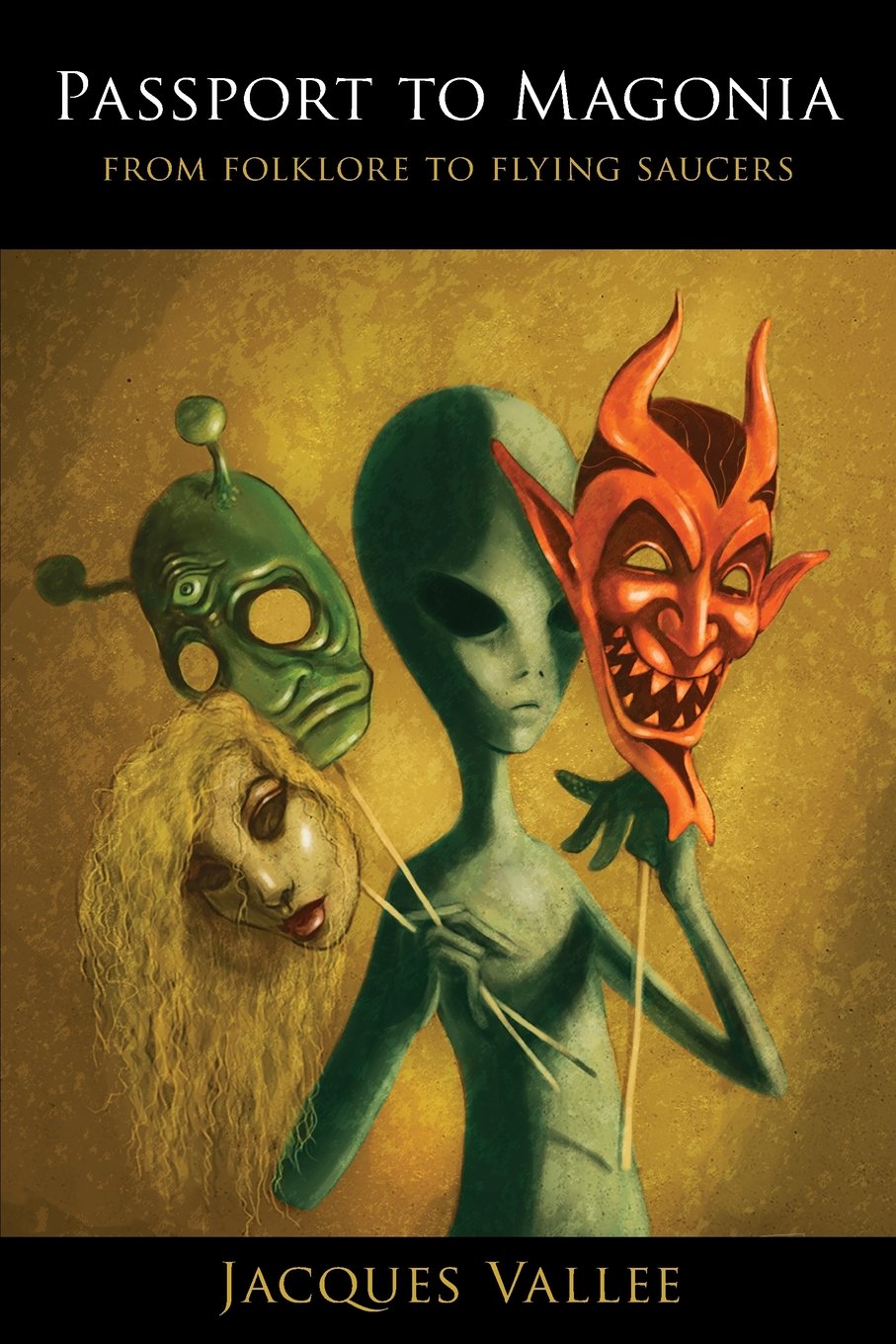
The most intellectually serious UAP book ever written
Published in 1969, Jacques Vallée’s Passport to Magonia remains the most intellectually ambitious and rigorously argued book in UAP literature. Vallée — a computer scientist and astronomer who collaborated with J. Allen Hynek on the classification of UAP reports — asks a question that most researchers have never seriously entertained: what if the extraterrestrial hypothesis is not just unproven, but wrong in a more fundamental way?
What it covers
Vallée’s central observation is that UAP encounters — particularly close contact cases involving humanoid beings — are structurally identical to accounts in medieval folklore, religious mythology, and ancient records of fairy encounters and angelic visitations. The beings described in modern abduction cases and the “little people” of Celtic tradition share the same physical characteristics, behavioral patterns, and psychological effects on witnesses. This pattern, Vallée argues, cannot be explained if UAP are simply visiting spacecraft from another star system. It can be explained if the phenomenon has been interacting with human consciousness throughout history — if it is, in some sense, native to our reality rather than arriving from outside it.
The book includes an appendix of historical close encounter cases from the 9th through 19th centuries — an extraordinary research document compiled from historical archives across multiple cultures — that alone justifies the book’s place in the literature.
Why it matters
Every serious subsequent theoretical development in UAP research has had to engage with Vallée’s argument here. The interdimensional hypothesis, the consciousness hypothesis, the control system hypothesis — all of them originate in or are deeply influenced by Passport to Magonia. John Keel read it and developed his ultraterrestrial framework. A generation of researchers followed.
The book also stands as a methodological model: Vallée builds his argument from data — thousands of cases, historical records, pattern analysis — not from speculation or personal testimony. This is what rigorous UAP research looks like.
Caveats
The book is dense and demands active engagement. Readers expecting narrative or dramatic accounts will be frustrated. This is a scholarly work, and it rewards careful reading rather than casual browsing. Some of the historical case analysis has been updated by subsequent research.
Who it’s for
Advanced researchers and anyone seriously engaging with the theoretical dimensions of UAP. Read The UFO Experience by Hynek first for the empirical foundation, then come here for the theoretical challenge that no one has yet answered.
Where to get it
Frequently Asked Questions
What is Passport to Magonia by Jacques Vallée about?
Passport to Magonia (1969) proposes that UFO encounters are not a modern phenomenon but a recurring pattern across human history — documented in fairy folklore, religious visions, and mythological accounts worldwide. Vallée argues that whatever is behind UAP has been interacting with humans for centuries, challenging the extraterrestrial hypothesis.
Who is Jacques Vallée?
Jacques Vallée is a French-American computer scientist, venture capitalist, and UAP researcher who worked alongside J. Allen Hynek at Northwestern University. He later developed the interdimensional hypothesis as an alternative to the extraterrestrial explanation and has been involved in materials analysis of alleged UAP artifacts.
What is the interdimensional hypothesis?
Vallée proposed that UAP and associated entities may originate from dimensions or realities that intersect with our own — rather than from other planets. This hypothesis attempts to account for the phenomenon’s apparent ability to appear and disappear, its behavioral patterns, and its parallels with historical accounts of non-human beings.
Is Passport to Magonia still influential in UAP research?
Yes. Vallée’s historical documentation of cross-cultural encounter patterns remains one of the most compelling arguments against a simple “nuts and bolts” spacecraft interpretation. His work is cited by researchers across the spectrum and has influenced how the U.S. intelligence community frames the UAP problem.