
Last updated: June 16, 2026
Affiliate disclosure: This review contains Amazon affiliate links. As an Amazon Associate I earn from qualifying purchases at no extra cost to you.
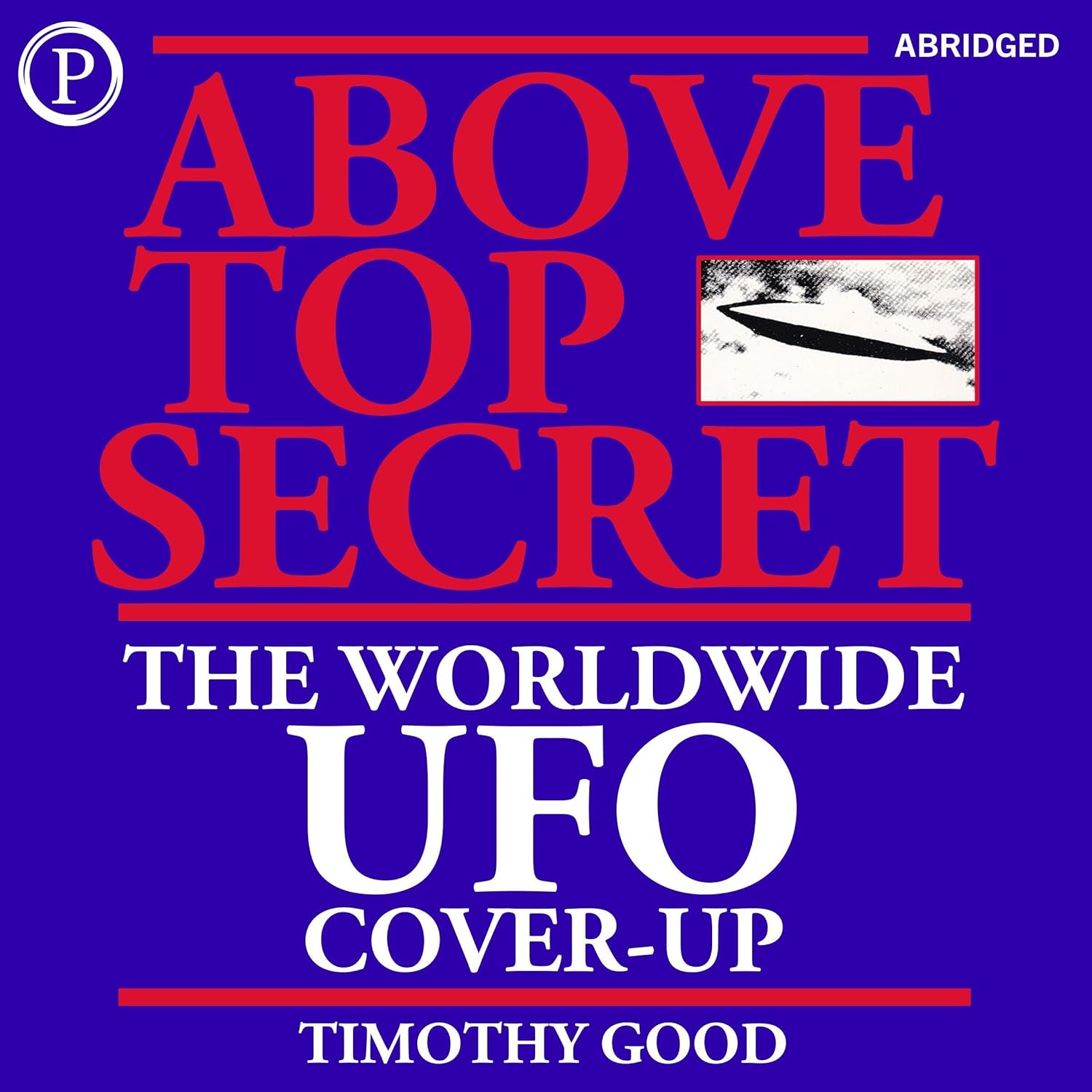
| Author | Timothy Good |
| Publisher | William Morrow |
| Published | 1988 |
| Rating | ★★★★☆ |
The book that forced governments to respond
When Timothy Good’s Above Top Secret was published in 1987, it became an international bestseller and — more importantly — forced the British government to formally acknowledge for the first time that UAP research had taken place within the Ministry of Defence. The book achieved this not through speculation but through the systematic presentation of government documents from the US, UK, France, Canada, and Australia, many obtained through FOIA requests and intelligence sources. It remains one of the most significant works in the history of UAP disclosure.What it covers
Good’s scope is global and historical, spanning four decades of government UAP involvement across multiple countries. The book documents the US government’s classified research programs, the UK Ministry of Defence’s internal assessments, French government UAP investigations, and the broader pattern of official secrecy that Good argues constitutes a coordinated international cover-up. The book was also the first to publish what claimed to be MJ-12 documents — the alleged presidential briefing papers about recovered UAP material. The authenticity of those specific documents remains contested, but the broader argument about government secrecy has been substantially vindicated by subsequent FOIA releases and congressional testimony.Why it matters
The British government’s response to this book — formally acknowledging UAP files existed while declining to release them — was a significant crack in the wall of official denial. It established a template for UAP disclosure advocacy: use documents, not testimony, to force official acknowledgment. Researchers and journalists who followed this approach over the next three decades eventually produced the current disclosure environment.Caveats
Some of the specific documents Good cites — particularly the MJ-12 papers — are disputed. Subsequent researchers have found evidence that some documents were fabricated, though the broader pattern of government secrecy Good documents is well-supported. Read critically, checking specific document claims against later scholarship.Who it’s for
Essential for understanding the history of government UAP secrecy and the origins of the modern disclosure movement. Best read alongside Richard Dolan’s UFOs and the National Security State for a more rigorously sourced companion account.Where to get it
Frequently Asked Questions
What is Above Top Secret by Timothy Good about?
Above Top Secret (1987) is a comprehensive investigation of UFO secrecy across multiple governments, drawing on declassified documents, insider testimonies, and official records to argue that the U.S. and other governments have recovered craft and bodies of non-human origin and have maintained classified programs to study them.
Who is Timothy Good?
Timothy Good is a British author and UFO researcher who has written extensively on government UAP secrecy. He has briefed members of Congress, the Ministry of Defence, and senior military officials. His research methodology focuses on documentary evidence and named insider sources.
What governments does Above Top Secret examine?
Good investigates UAP secrecy in the United States, United Kingdom, Soviet Union, Canada, Australia, and other nations, documenting consistent patterns of classification and public denial across multiple governments despite robust private evidence files.
Is Above Top Secret still accurate given more recent disclosures?
Good’s core claim — that multiple governments have operated classified UAP programs — has been largely validated by subsequent events, including the revelation of AATIP, congressional testimony by David Grusch, and the PURSUE portal releases. Many cases he documented have since been confirmed through declassification.