
Last updated: June 23, 2026
Affiliate disclosure: This review contains Amazon affiliate links. As an Amazon Associate I earn from qualifying purchases at no extra cost to you.
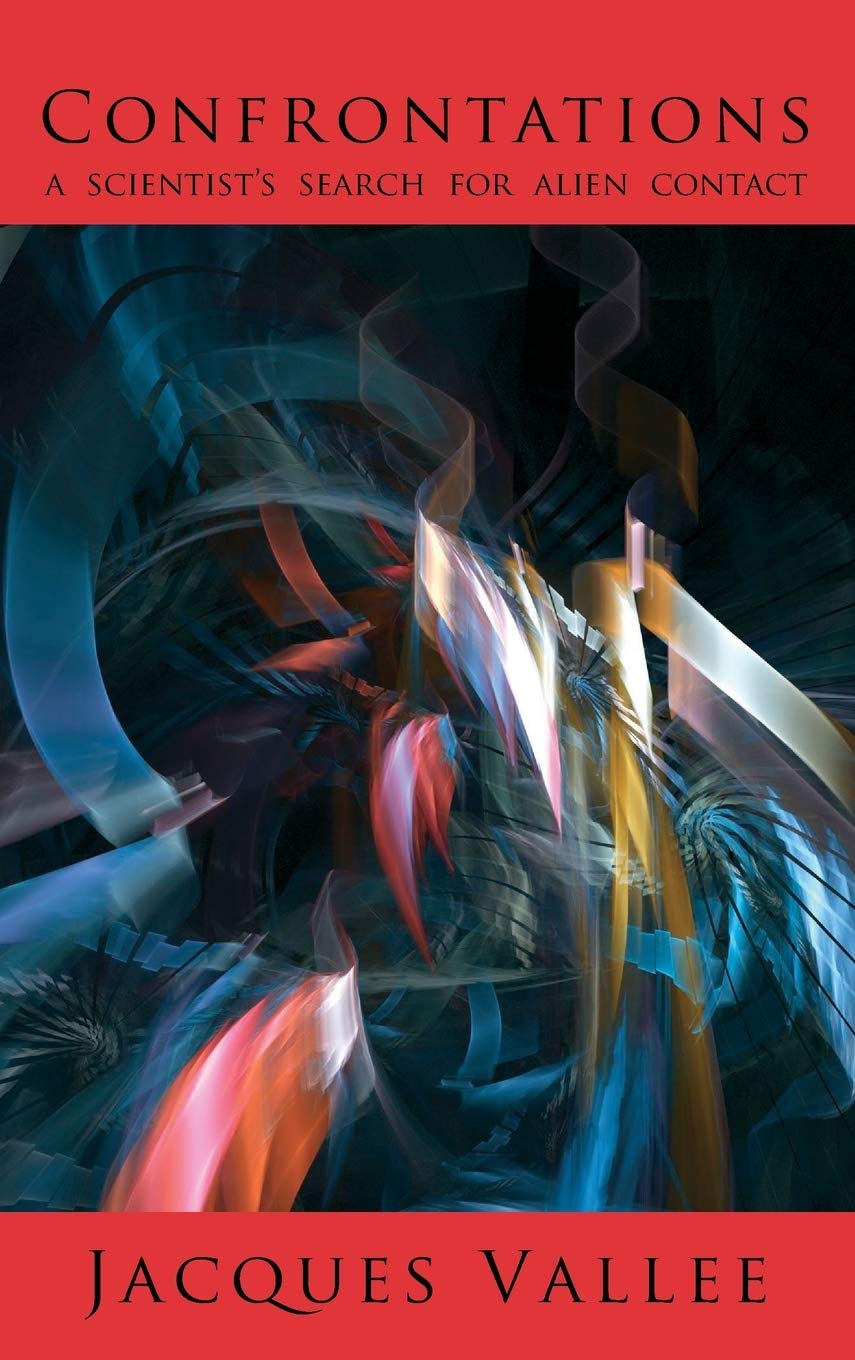
| Author | Jacques Vallée |
| Publisher | Ballantine Books |
| Published | 1990 |
| Rating | ★★★★☆ |
Fieldwork in the danger zone
Confrontations is the most viscerally uncomfortable book Jacques Vallée has written, and arguably the most important for its specific contribution to the UAP literature. Where Dimensions is theoretical and Passport to Magonia is historical, Confrontations is investigative fieldwork — Vallée traveling to Brazil, Puerto Rico, and the American Southwest to investigate cases where UAP encounters produced documented physical injuries. The result is the only major UAP book built around medical evidence of close encounter effects on the human body.
Vallée published Confrontations in 1990, completing his three-volume series. By this point he had moved beyond theorizing about what UAPs might be and had become frustrated with the field’s tendency toward speculation untethered from primary evidence. Confrontations is his corrective: a systematic effort to document what happens to people who get close, and to follow the evidence wherever it leads — including into uncomfortable confrontations with governments that preferred the encounters had never happened.
The fieldwork methodology is distinctive. Vallée interviews witnesses himself, obtains and cross-references medical records, tracks down military personnel who participated in investigations they were later ordered to forget, and builds case files the way a forensic investigator would. He is rigorous about distinguishing what he observed from what he was told, and what was documented from what remains uncertain. This is not a credulous book, even if its subject matter is extraordinary.
What it covers
The heart of Confrontations is Vallée’s investigation of the Colares Island UAP wave of 1977 — one of the most extraordinary and least-known episodes in UAP history. For months, the fishing communities on Colares Island in the Brazilian state of Maranhão experienced nightly encounters with low-flying objects that emitted focused beams of light at residents. The beams caused burns, puncture wounds, temporary paralysis, and symptoms consistent with radiation exposure — hair loss, anemia, prolonged weakness. Multiple residents required hospitalization. Some witnesses reported ongoing health effects years later.
What makes Colares exceptional in the UAP literature is not just the scale of the encounters or the severity of the injuries — it’s that the Brazilian Air Force took it seriously enough to send a military investigation team. Operation Prato, commanded by Captain Uyrangê Hollanda, collected over 500 photographs, 16mm film footage, medical reports, and thousands of pages of witness testimony. It is one of the most thoroughly documented UAP investigation files in any country’s possession. Then it was suppressed. Captain Hollanda, who eventually broke his silence and spoke to a Brazilian journalist about the investigation, died in 1997 under disputed circumstances.
Vallée gained access to witnesses and eventually to Air Force personnel who had participated in Operation Prato. His account is the most complete English-language documentation of Colares — a case that would be cited extensively if it had occurred in the United States but remains obscure primarily because it happened in rural Brazil. Beyond Colares, Confrontations covers cases in Puerto Rico (the Laguna Cartagena incidents), the American Southwest, and a cluster of events in France. Each case contributes to a larger pattern: close-range UAP encounters produce consistent physiological effects, and those effects suggest something physically real is interacting with the human body.
The book also develops Vallée’s critique of the extraterrestrial hypothesis — not to dismiss UAP reality, but to argue that the patterns do not fit what we would expect from craft traveling from another star system. The encounters are too frequent, too distributed across all of human history, and too consistent in their psychological and physiological effects to conform to a simple nuts-and-bolts spacecraft model. Vallée pushes toward something stranger: a phenomenon that behaves more like a control system than a visitation, interacting with human consciousness in ways that extraterrestrial craft alone cannot account for. This theoretical framework, introduced in Dimensions, is tested against physical evidence in Confrontations.
How it compares to the rest of the Vallée trilogy
Reading Confrontations without the prior books is possible but reductive. Passport to Magonia (1969) establishes the historical depth of the phenomenon — consistent patterns in folk encounters, religious visions, and mythology that predate aviation. Dimensions (1988) introduces the theoretical framework: the idea that UAPs operate across categories of reality and that the extraterrestrial hypothesis is too limited. Confrontations (1990) tests that framework against field evidence — it’s where theory meets the damaged tissue, the suppressed government files, and the terrified witnesses.
In tone, Confrontations is darker and more urgent than either predecessor. Dimensions reads like a philosopher working through implications; Confrontations reads like an investigative journalist who has seen things he cannot explain and is determined to document them before the evidence disappears. Vallée’s frustration with the field — with official denial, sensationalism, and researchers more interested in fame than accuracy — is more visible here than in any other book he wrote.
There is also a clearer political dimension. The suppression of Operation Prato is not presented as a curiosity but as a data point in a larger pattern: governments around the world have investigated UAPs, found them real and physically significant, and then classified or buried their findings. That pattern, which Vallée documents through multiple national examples in Confrontations, was later corroborated by American whistleblower accounts — notably Luis Elizondo’s account of AATIP and the suppression of the Pentagon’s own UAP program.
Why it matters
UAP research rarely produces physical medical evidence. The field is dominated by photographs, radar returns, and witness testimony — evidence types that are suggestive but rarely conclusive. The Colares cases are a significant exception: documented physical injuries to multiple witnesses, cross-referenced with military investigation records, in a context where the investigating government agency deployed a specialized team with cameras and medical staff.
Vallée’s documentation of these cases matters not because he resolves what the phenomenon is, but because he raises the evidentiary bar for the conversation. After Confrontations, “there’s no physical evidence” is demonstrably false as a dismissal of UAP encounters. The evidence exists. The question is why it remains so poorly known — and that question points directly to the government information control pattern that Vallée makes central to the book’s second argument.
The Operation Prato suppression also matters in the current disclosure context. When American officials and whistleblowers describe a decades-long UAP concealment effort, Confrontations provides comparative evidence that this pattern is not unique to the United States. Brazil, France, and other countries have gone through the same cycle: investigation, documentation, suppression, and the gradual emergence of participants willing to break their silence. The parallels are striking enough that Confrontations deserves to be read alongside contemporary disclosure accounts, not treated as historical curiosity.
Caveats
Vallée is working with incomplete information — this is a feature of the subject matter, not a flaw in his methodology. Much of the Operation Prato documentation remains classified or simply unavailable; Vallée is working from witness interviews and fragments, not the full file. Some of his field investigations are necessarily limited by access and timing: visiting a site years after the events, speaking to witnesses whose memories have been shaped by subsequent experience, reconstructing events from indirect sources. He is clear about these limitations, which distinguishes Confrontations from less careful books in the genre, but the limitations are real.
The theoretical sections — Vallée’s extension of the “control system” hypothesis from Dimensions — are less fully developed than in the earlier book. The argument sometimes feels grafted onto the fieldwork chapters rather than integrated with them. Readers primarily interested in case evidence may find the philosophical interludes frustrating, while readers primarily interested in theory may wish those sections were longer and more rigorous. This structural tension is the book’s one genuine weakness.
Vallée also does not resolve the central mystery — what these phenomena are, who or what is behind them, what the injuries are intended to accomplish. If you are looking for answers, Confrontations will frustrate you. What it offers instead is a rigorous, documented demonstration that the phenomenon is real, physically significant, and systematically concealed. That’s a different kind of value, and arguably a more honest one.
Who it’s for
Essential for anyone doing serious research into the UAP phenomenon, particularly researchers interested in physical evidence and government concealment patterns. This is not a book for UAP newcomers — Confrontations assumes familiarity with the basic debate about the phenomenon’s reality and focuses on what specific cases reveal about its nature and the institutional response to it.
It is most rewarding read in sequence after Dimensions — Vallée’s theoretical framework from that book makes the fieldwork chapters of Confrontations considerably richer. Readers who have already engaged with contemporary disclosure accounts — particularly Luis Elizondo’s Imminent — will find Confrontations illuminating as historical precedent: the patterns Elizondo describes from inside the American system match, in striking detail, what Vallée documented from Brazilian and European sources three decades earlier.
Where to get it
Frequently Asked Questions
What is Operation Prato and why is it significant?
Operation Prato was a Brazilian Air Force investigation of the 1977 UAP wave over Colares Island in the state of Maranhão. Commanded by Captain Uyrangê Hollanda, the operation ran for months, collecting over 500 photographs, film footage, and medical records documenting residents injured by light beams from unidentified objects. The files were subsequently classified. Hollanda later broke silence and died in 1997 under disputed circumstances. Operation Prato represents one of the most thoroughly documented military UAP investigations by any government — and one of the most systematically suppressed.
Did UAP encounters at Colares actually injure people?
Yes, according to multiple sources Vallée investigated — witness testimony, medical records, and the Brazilian Air Force’s own investigation files. Documented injuries included burns, puncture wounds, temporary paralysis, and symptoms consistent with radiation exposure, including hair loss and anemia. Several residents required hospitalization. Vallée cross-references these accounts with military records and medical documentation. Confrontations presents the Colares case as the strongest physical evidence in the UAP literature that close-range encounters produce real, measurable physiological effects on the human body.
How does Confrontations differ from Dimensions?
Dimensions is primarily theoretical — Vallée developing the argument that the extraterrestrial hypothesis is insufficient and proposing his “control system” framework. Confrontations is primarily evidential — Vallée doing fieldwork, interviewing witnesses, accessing medical records, and building case files around physical encounters. Dimensions asks what the phenomenon might be; Confrontations documents what it demonstrably does to people who get close. Reading both in sequence gives the fullest picture of Vallée’s contribution to the field.
What is Vallée’s control system hypothesis?
Developed in Dimensions and extended in Confrontations, the control system hypothesis holds that the UAP phenomenon functions less like a visitation from an external intelligence and more like a feedback mechanism — something that interacts with human consciousness across time, shaping belief systems and cultural development in ways a simple extraterrestrial interpretation does not explain. Vallée notes that the frequency and distribution of encounters across all of human history is inconsistent with what we would expect from spacecraft from another star system. The framework attempts to account for this without dismissing the phenomenon’s reality.
Are the Operation Prato files available to researchers?
Partially. In 2009, Brazil’s Air Force partially released UAP investigation documents, including materials related to Operation Prato. However, the release was incomplete — the 500+ photographs and much of the film footage documented in the original investigation have not been confirmed as fully available to researchers. Vallée’s account in Confrontations, based on interviews with participants and access to fragments, remains the most complete English-language reconstruction of what Operation Prato documented.
Is Confrontations relevant to the current UAP disclosure debate?
Highly relevant. The pattern Vallée documents — government investigation, serious findings, systematic suppression, eventual partial disclosure — maps closely onto what American whistleblowers describe about the U.S. UAP program. When figures like David Grusch testify about a decades-long concealment effort, or when Luis Elizondo describes AATIP being buried, Confrontations provides historical context: this pattern has occurred in multiple countries, and Brazil’s Operation Prato is among the clearest international examples on record.
Do I need to read Dimensions before Confrontations?
Not strictly required, but strongly recommended. Confrontations stands on its own — the fieldwork chapters are independently compelling. But Vallée’s theoretical framework, particularly the control system hypothesis and his critique of the extraterrestrial hypothesis, is developed at length in Dimensions and assumed in Confrontations. Starting with Dimensions gives you the conceptual foundation that makes everything in Confrontations considerably more meaningful.