
Last updated: June 27, 2026
Affiliate disclosure: This review contains Amazon affiliate links. As an Amazon Associate I earn from qualifying purchases, at no extra cost to you.
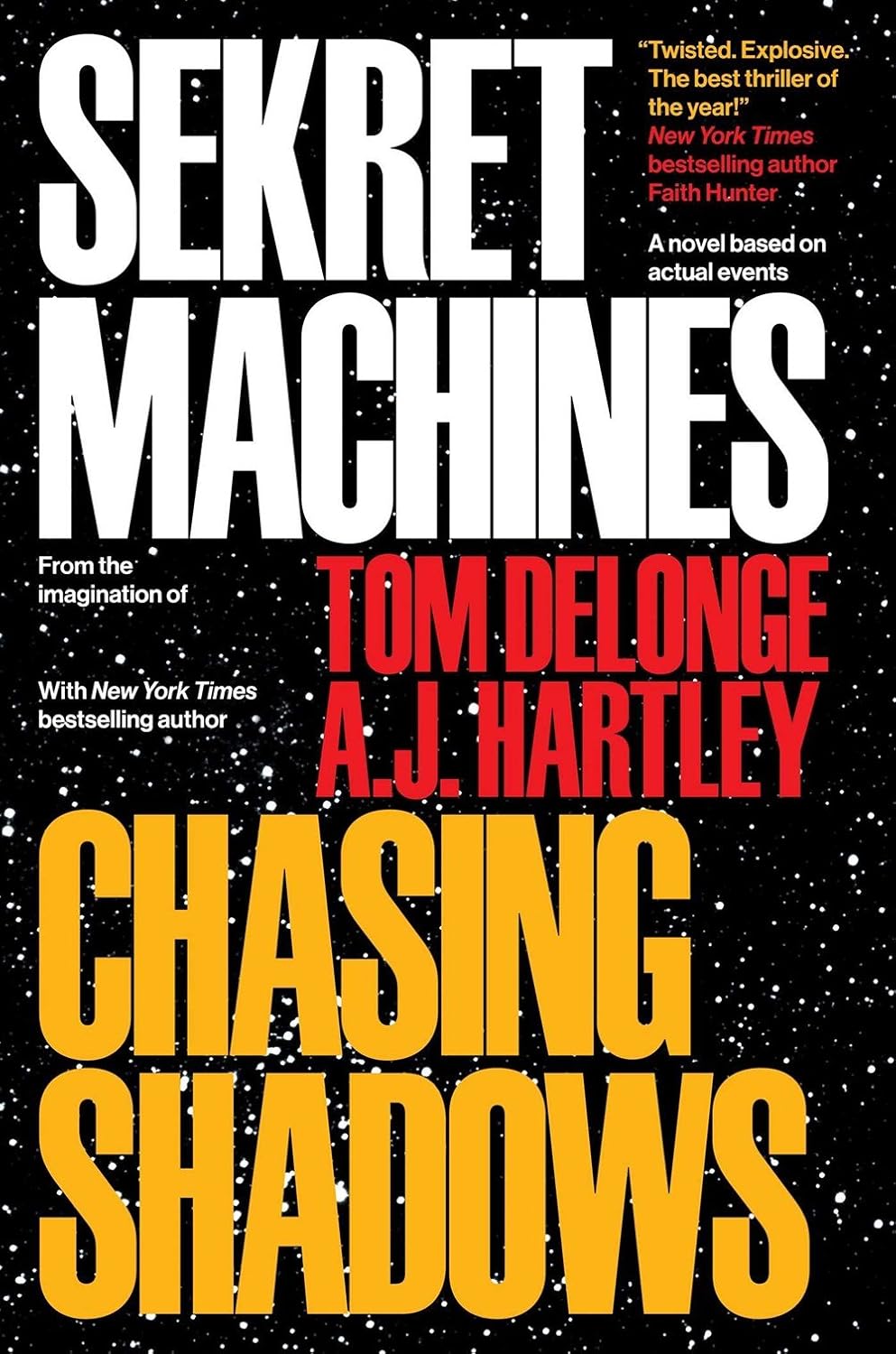
| Author | Tom DeLonge & Peter Levenda |
| Publisher | To The Stars |
| Published | 2016 |
| Narrator | Check Audible listing |
| Rating | ★★★★ |
It’s easy to dismiss a book co-written by the former frontman of Blink-182. That’s probably the point. Chasing Shadows is the opening chapter of what Tom DeLonge and Peter Levenda describe as a “full scope narrative” — a project that blurs fiction and documented fact to reveal, they claim, truths that couldn’t be told any other way. Whether you buy that framing or not, the book is more substantial than its origin story suggests.
What It Covers
Sekret Machines: Chasing Shadows (2016) is the first installment in a dual fiction/nonfiction series. The novel follows multiple protagonists — a test pilot, a journalist, a military officer — whose stories converge around UAP-related events. Levenda’s literary craft is evident throughout; the writing is considerably more polished than most UAP-adjacent fiction.
Thematically, the book draws on:
- Crash retrieval programs and black-budget aerospace projects
- The role of private contractors in UAP reverse-engineering efforts
- Government compartmentalization and the limits of what elected officials actually know
- The long historical arc of the UAP phenomenon, reaching back beyond the modern era
Why It Matters
The Sekret Machines project is notable for one specific reason: DeLonge demonstrably had access to high-level insiders, as confirmed by the Podesta emails released during the 2016 election cycle and by the eventual formation of To The Stars Academy with figures like former Deputy Assistant Secretary of Defense Chris Mellon and former AATIP director Luis Elizondo. Whether the fictional frame contains genuine insider intelligence or is creative extrapolation remains genuinely unclear — which is either the book’s greatest strength or its most significant problem, depending on your tolerance for ambiguity.
Closing Recommendation
Who should listen: Readers who enjoy narrative-driven UAP content and are comfortable with the fiction/nonfiction ambiguity. Also valuable for those tracking the To The Stars ecosystem and DeLonge’s insider connections.
Who can skip it: Readers who want straight documentation. The fictional frame will frustrate you.
Bottom line: More credible than it looks on the surface, more speculative than it claims to be. Approach with curiosity and healthy skepticism.
🎧 Listen on Audible 🛒 Buy on Amazon
Frequently Asked Questions
What is Sekret Machines: Chasing Shadows about?
Sekret Machines: Chasing Shadows (2016) is the first volume of a non-fiction series by Tom DeLonge and Peter Levenda arguing that the U.S. government has concealed knowledge of UAP for decades through a complex system of classified programs and public disinformation. It claims to draw on access to senior military and intelligence insiders.
Who are Tom DeLonge and Peter Levenda?
Tom DeLonge is the co-founder of Blink-182 who launched the To The Stars Academy (TTSA) and helped facilitate the 2017 release of declassified Navy UAP footage. Peter Levenda is an author specializing in the intersection of government secrecy, occultism, and power. Together they produced the Sekret Machines book series and a companion fiction series.
What sources does Sekret Machines draw on?
DeLonge has claimed access to senior U.S. military and intelligence figures who provided background information for the series. These sources are not named, which limits the book’s evidentiary value. The work is best read as a synthesis of established UAP research combined with claimed insider perspectives.
How does Sekret Machines relate to the broader disclosure movement?
The Sekret Machines series was part of DeLonge’s coordinated effort — alongside TTSA — to accelerate public disclosure of UAP information. Its publication coincided with behind-the-scenes negotiations between DeLonge’s team and the Department of Defense that eventually resulted in the 2017 declassified Navy footage release.