
Last updated: July 1, 2026
Seen a day before wide release, Thursday, June 11, 2026
⚠ SPOILER ALERT: This review discusses the plot, characters, and ending of Disclosure Day in full detail. If you have not seen the film yet and want to go in fresh, stop here and come back after.
My wife and I caught an early afternoon screening of Disclosure Day today, a day before its official wide release, and we had been counting down to this moment for a long time.
We first heard about the film’s production right around the time of the New Jersey drone sightings, in late 2024, when the country briefly stopped pretending UAPs were not real. From that point on, we tracked every pre-production update, every casting announcement, and every trailer drop through the spring and summer of 2026. We had seen Spielberg handle this subject before, across nearly fifty years of filmmaking, so we knew what he was capable of. But a subject this politically charged, this personal to so many of us in the UAP community, gave us every reason to be a little nervous going in.
Disclosure Day did not disappoint.
What Disclosure Day Is, and Is Not
Disclosure Day is not a sequel to Close Encounters of the Third Kind. It does not pick up any narrative thread from 1977. What it does instead is something more interesting: it takes nearly fifty years of real-world UAP disclosure efforts, congressional hearings, whistleblower testimony, and the modern vocabulary of the phenomenon, and builds a gripping thriller around all of it.
This is a film made for a 2026 audience. It speaks the language of the current disclosure movement, including crash retrievals, reverse-engineered craft, corporate black sites operating outside congressional oversight, and the deliberate suppression of non-human biological intelligence. It is not a film that questions whether contact happened. It assumes contact happened decades ago, and it asks who decided you were not allowed to know.
The Plot
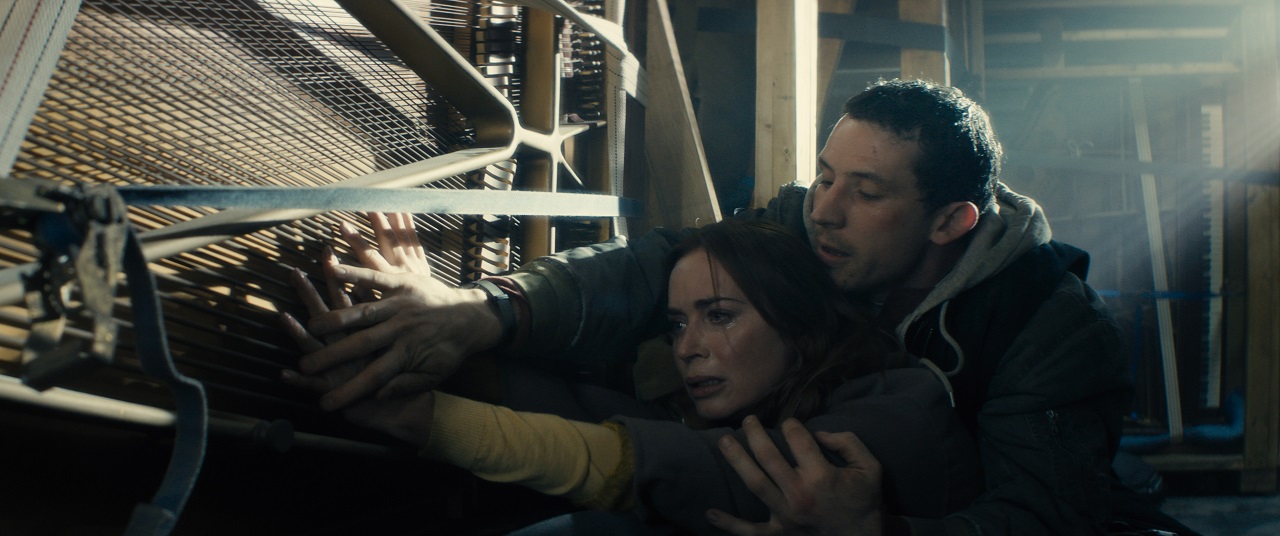
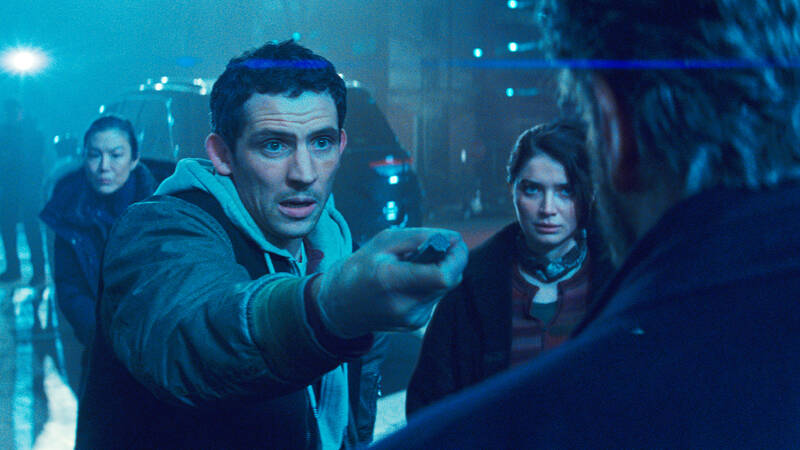
Set against the backdrop of an escalating global crisis and the looming threat of World War III, Disclosure Day follows a world on the edge of catastrophic transparency. The story centers on Daniel (Josh O’Connor), a cybersecurity specialist working for a rogue aerospace contractor who decides to defect, taking with him an unconstitutional corporate archive containing 80 years of documented crash retrievals, recovered non-human biological intelligence, and evidence of technology that was never supposed to see the light of day.
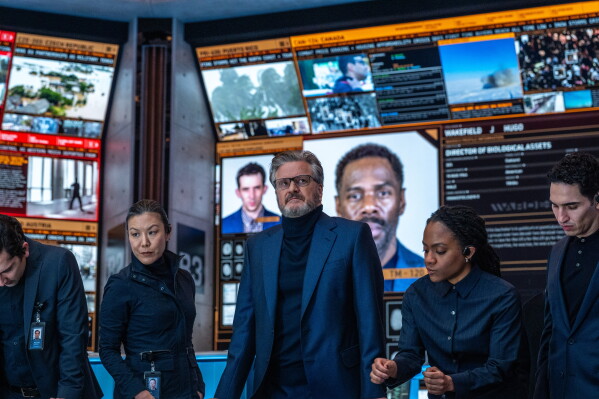
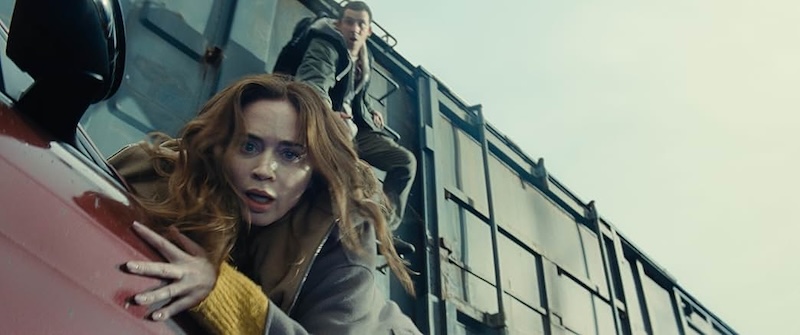
Running alongside him is Jane (Emily Blunt), a local weather presenter whose latent psychic abilities and command of unknown languages are violently unlocked by the phenomenon. Together they race across rural America in a cat and mouse chase, pursued by the shadowy apparatus trying to keep the archive buried, and guided by a mentor figure played with enormous gravitas by Colman Domingo. The villain is Colin Firth, and he is terrifying in his quietness.
Early critics have compared the film to Enemy of the State, and that reference makes sense on the surface: the whistleblower on the run, the all-seeing corporate surveillance machine closing in. But the more accurate comparison is North by Northwest. Hitchcock’s 1959 classic shares nearly every structural ingredient with this film: the couple caught up in a conspiracy larger than themselves, the set pieces, and above all the smoothly sinister English villain who believes entirely in what he is doing. It is, coincidentally, one of my favorite Hitchcock films, and seeing Spielberg work in that same register here felt both deliberate and earned.
What Spielberg Gets Right
Spielberg returns to the instinct that made Close Encounters, E.T.: The Extra-Terrestrial, and even the television series Taken endure: the non-human biologics in this film are not predatory and not monstrous. They are empathetic, observant, and genuinely concerned with where humanity is headed, particularly given the ongoing threat of nuclear and global conflict. In a landscape where Hollywood reflexively reaches for the invasion narrative, this choice feels almost radical, and it was clearly the right one.
The film’s sharpest and most satisfying move is that the true villains are human. The terror in Disclosure Day does not come from beyond our atmosphere. It comes from a multi-layered corporate and military-industrial cabal, supremely well-funded and operating entirely outside constitutional boundaries, that has decided for decades that you do not get to know what was found. Firth’s character in particular will be immediately recognizable to anyone who has followed the disclosure movement seriously.
The screenplay also weaves in a compelling historical sequence referencing the long-circulating account of President Nixon covertly showing non-human biological remains to a celebrity confidant in the 1970s. For anyone deep in the UAP literature, this moment lands like confirmation. For general audiences, it reads as stranger-than-fiction historical intrigue, and Spielberg handles it cleanly.
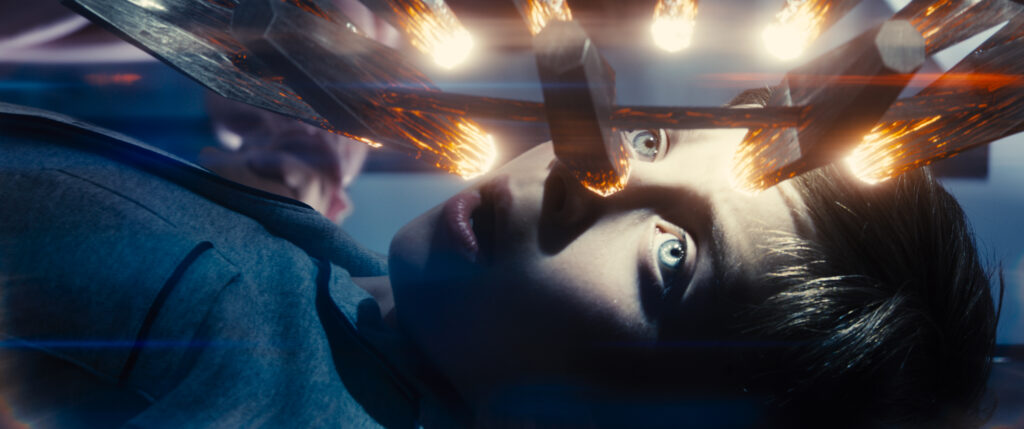
The film also explores advanced consciousness technology linked to the non-human intelligence, specifically a mind-interface device that Firth’s antagonist uses to surveil and manipulate those around him. The film treats this as advanced science rather than fantasy, and the horror of watching it in the wrong hands is genuinely unsettling.
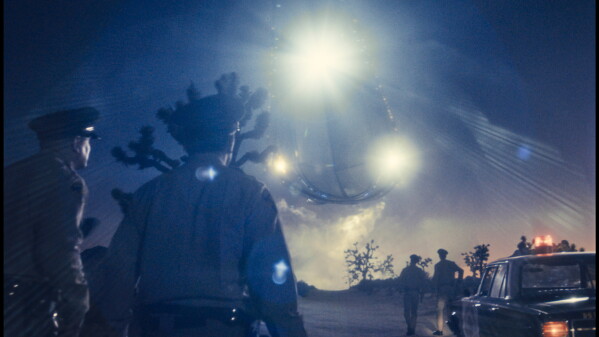
The Performances
This is where Disclosure Day earns its place alongside Spielberg’s best work.
Emily Blunt delivers what may be the finest performance of her career. Her portrayal of Jane, a woman whose inner life is being rewritten by something she cannot name, is raw, precise, and at times devastating. There is a scene midway through the film where Jane, exhausted and frightened, says she does not want to become someone’s religion. The theater went completely silent. My wife was moved to tears. That is the performance Blunt has been building toward for twenty years, and she deserves serious consideration for Best Actress.
Josh O’Connor anchors the film as its moral center. Daniel is not a superhero. He is a man making a terrifying choice because he cannot live with the alternative, and O’Connor makes every step of that journey feel completely real.
Colman Domingo commands every scene he is in. His character, a protective mentor who has been quietly sheltering whistleblowers for years, brings a gravity and warmth that offsets the film’s more clinical tension. He is the conscience of the movie.
Colin Firth plays his villain as a man who genuinely believes what he is doing is necessary. That is the scariest possible interpretation, and Firth commits to it entirely.
Where the Film Falls Short
Disclosure Day is exceptional cinema, and the UAP community has nonetheless been vocal about what it leaves out.
To keep the Hollywood narrative manageable, the film presents only a single distinct type of non-human biologic. Anyone familiar with the actual whistleblower testimony and crash retrieval documentation knows that this understates the complexity considerably. It is a forgivable shorthand, but it does narrow the world the film builds.
The larger omission is the film’s failure to reckon with what 80 years of reverse engineering actually produced. Daniel’s archive acknowledges that craft were recovered. What it never shows, and what the film never addresses, is the existence of human-manufactured anti-gravity vehicles and how human factions could use them for deceptive, staged psychological operations. This is widely considered the true third rail of modern disclosure, and by avoiding it the film stops just short of the full picture.
The most common complaint among general audiences, and it surfaced widely on Reddit after the first screenings, is that the film is structurally a road thriller. The non-human biologics are present but often in the background, and audiences who expected a deeper exploration of the phenomenon found themselves watching data-leak sequences and highway pursuits instead. That is a tonal choice, not necessarily a flaw, but it has divided viewers.
On a completely different note, the live broadcast climax briefly reminded me of the ending of Joe Dante’s The Howling (1981), where the truth is also revealed to the world on live television with equally world-shattering consequences. It is a silly comparison, and I am fully aware of that, but it crossed my mind and I could not let it go unmentioned.
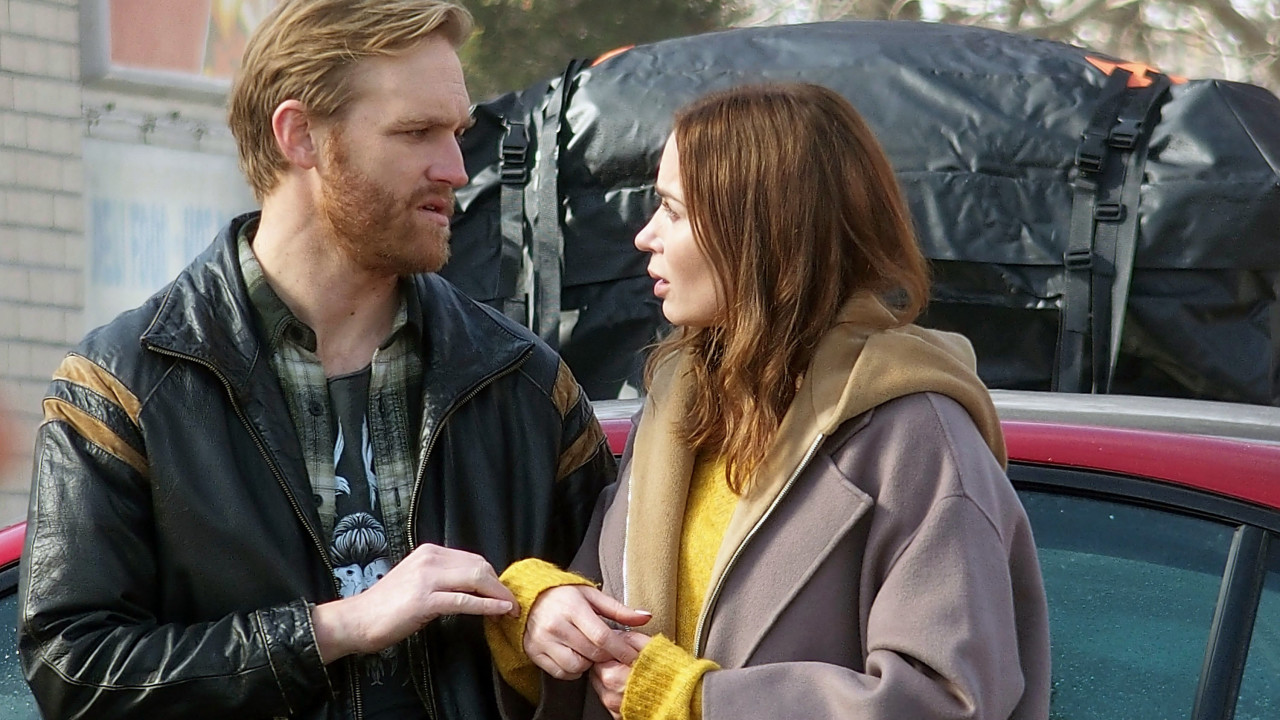
The film’s ending, which closes on a single word before cutting to black, has generated a lot of debate. With the world at DEFCON 2 and humanity watching the broadcast, Margaret delivers the message the non-human intelligence passed through Daniel: “Listen.” Some audiences found it abrupt, feeling that Spielberg cut away precisely when the world-changing aftermath should have begun. But screenwriter David Koepp has explained the choice in an interview with Den of Geek: “Listen” is the first word of Slaughterhouse-Five, Kurt Vonnegut’s 1969 anti-war novel about a man who becomes “unstuck in time” after surviving the firebombing of Dresden and encountering an alien race (a novel I have not read myself, but now feel compelled to), and of numerous Hebrew prayers. He wrote it and stopped there, because when one word says everything, you stop talking. The ending is not a cliffhanger. It is the whole message. Think about what “Listen” actually means in the context of everything that has just unfolded on screen. After 80 years of suppression, of whistleblowers being silenced, of evidence being buried, of governments deciding on behalf of all of humanity that we were not ready to know, the first word that non-human intelligence chooses to deliver to the entire world is not a warning, not a demand, and not a revelation of cosmic secrets. It is an instruction to do the one thing we have consistently failed to do: listen. Listen to the whistleblowers. Listen to the evidence. Listen to each other. Listen to something larger than our own fear and our own need for control. With the world at DEFCON 2 and humanity on the edge of destroying itself, the message is that our greatest threat has never been what is out there. It is our refusal to pay attention to what is right in front of us.
This resonates deeply with what Denis Villeneuve’s Arrival (2016) delivered, a film I consider one of the finest explorations of this subject ever made. In Arrival, non-human intelligence does not come to conquer or to warn. It comes to give humanity a gift, a new language, and the act of learning to communicate with something beyond our understanding forces us to communicate better with each other, ultimately averting a global war. The message in both films is the same: the greatest barrier between humanity and a better future is not the unknown. It is our inability to stop, set aside our fear and our weapons, and simply talk to one another. “Listen” and Arrival are separated by ten years of filmmaking but are unmistakably tuned to the same frequency.
The Bigger Picture
Disclosure Day arrives at a moment when the real world is not waiting for Hollywood to catch up. The June 9 Capitol press conference, the PURSUE portal document releases, and the UAP Disclosure Act moving through Congress are not background noise. The timing of this film is not a coincidence. Something is coordinating, and whether you read that as hopeful or unsettling probably says something about where you are on all of this.
What Spielberg has given us is not the full truth. No single film could be. But he has given us something important for this particular moment: a mainstream, emotionally powerful narrative that places the real villains exactly where they belong, not in the stars, but in the boardrooms and black sites on the ground. It carries the same reassuring theme he has been delivering since Close Encounters, which is that empathy is our most extraordinary resource, despite how humans tend to treat what they fear and do not understand. That is something Spielberg has told us consistently, with Close Encounters, E.T., and Taken, and he tells it again here with the same sure hand.
My wife enjoyed this film as well, at times moved by the performances and by the overwhelming sense of something extraordinary unfolding all at once, with such awe and scope, set against the pressing and very real backdrop of a world on the edge.
If you have been following this story for years, Disclosure Day will feel like partial vindication. If you are new to it, it may just be your starting point. Either way, go see it. And when you come out of the theater, there are fifty years of books, testimony, and documentation waiting to show you how much more there is.
⭐⭐⭐⭐ — Essential viewing. Flawed in places, magnificent where it matters.
Looking for what to read after the film? Start with the books that laid the groundwork:
- Imminent — Luis Elizondo — The closest thing to a firsthand government account of what has been hidden
- In Plain Sight — Ross Coulthart — Investigative journalism that brought crash retrieval claims into mainstream credibility
- UFOs and the National Security State — Richard Dolan — The definitive historical record of government secrecy on the phenomenon
- UFOs: Generals, Pilots and Government Officials Go on the Record — Leslie Kean — The institutional credibility argument, built from primary sources
Pablo Sierra is the founder of UAP Disclosure Reads.
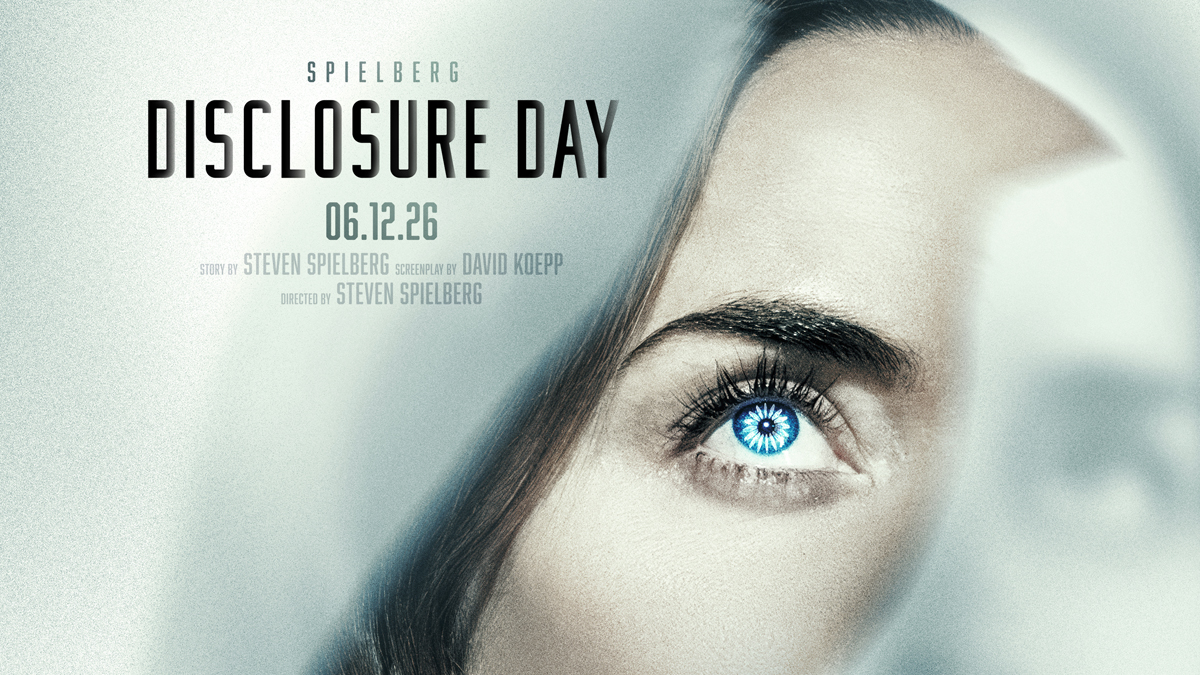
Curious how much of this is grounded in the real 1947 event? Read our fact-vs-fiction breakdown: Roswell Incident: What’s Real in Disclosure Day.
Frequently Asked Questions
What is Disclosure Day about?
Disclosure Day is a documentary/narrative film examining the UAP disclosure movement and its central figures — including congressional witnesses, whistleblowers, and government insiders. The film places human decision-makers at the center of the cover-up, departing from previous UAP documentaries that focused primarily on the phenomenon itself.
How does Disclosure Day approach the UAP cover-up?
The film identifies specific human actors — institutional, corporate, and political — who have actively maintained UAP secrecy, moving beyond the vague “government cover-up” framing of earlier UAP media. This makes it among the most directional treatments of the disclosure question yet produced for mainstream audiences.
Who is featured in Disclosure Day?
Disclosure Day features key figures from the modern disclosure movement, including individuals whose congressional testimony and public statements have driven UAP transparency efforts. Specific subjects are detailed in the full review.
Is Disclosure Day recommended for people new to UAP?
The film assumes some familiarity with the modern disclosure movement and works best for viewers who have followed the congressional hearings and whistleblower testimony. New viewers may benefit from reading background material — such as the UAP Disclosure Timeline on this site — before watching.